


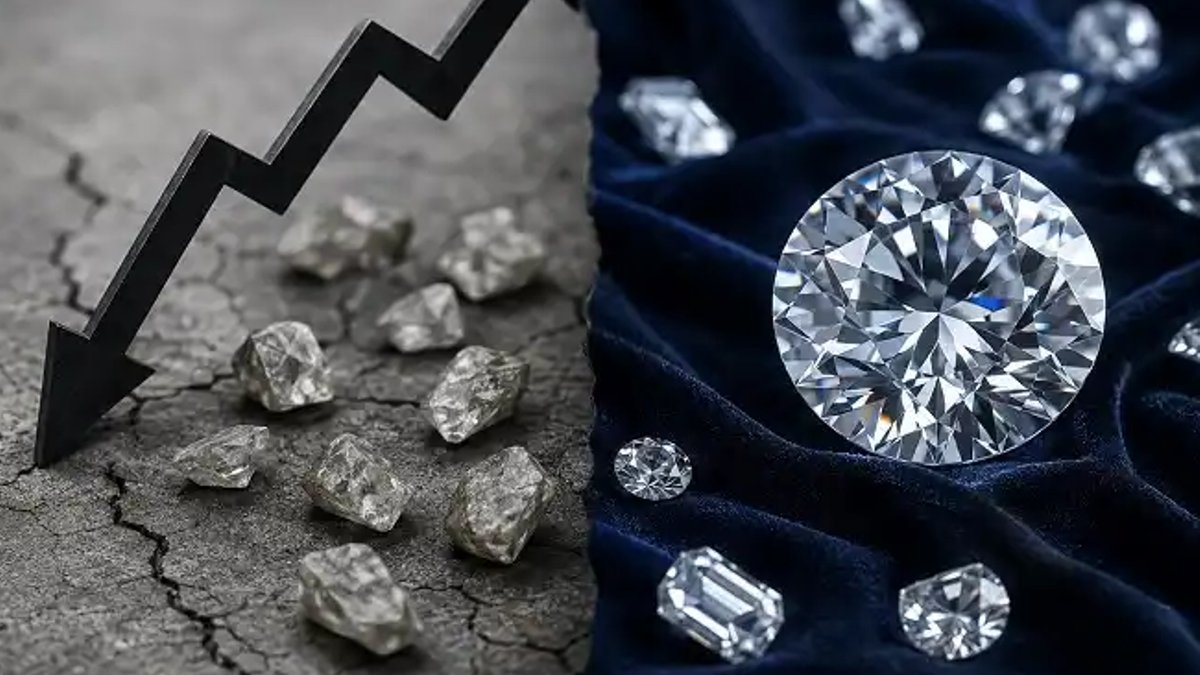
The natural diamond industry is facing significant challenges, despite efforts by companies like De Beers and the Natural Diamond Council to maintain a positive image. For decades, the industry successfully marketed diamonds as rare and timeless symbols of love and wealth, but mounting evidence suggests that this image is no longer convincing consumers.
The diamond industry’s struggles are starkly illustrated by De Beers’ valuation, which has dropped to around $1 billion after years of decline. Even though the company cut its first-half loss to $188 million by trimming expenses, the results still signal deep financial stress across the sector.
Proponents of natural diamonds claim that supply shortages and shifting consumer attitudes—especially in India—are signs of recovery, though the U.S. market remains steady. Still, these changes have done little to stabilize overall diamond pricing or inventory levels.
Many jewelry stores avoid offering fair buy-back deals, and resale prices for diamonds often fall far below their original cost. Meanwhile, pawn shops are increasingly hesitant to buy certain natural diamonds because of weaker demand and unclear prospects for reselling them.
Large Diamonds Hold Value
Large diamonds, those two carats or heavier, have held up better than smaller stones, thanks to limited rough material availability. Gem Diamonds reported first-half sales increasing 33 percent year-on-year to $59.5 million, while its average selling price rose 38 percent to $1,395 per carat, driven primarily by exceptional larger stones.
High-end brands like LVMH and Kering report strong jewelry sales in the U.S. and Asia, but experts caution that luxury performance doesn’t necessarily reflect broader diamond market health. Affluent buyers often prioritize brand prestige over the actual gem’s value.
Unconventional diamond shapes, especially elongated cuts, are gaining traction. Marquise diamonds have emerged as the most expensive fancy shape, while long cushions are reportedly trading at premiums of between 20 and 25 percent over their square counterparts.
As the industry continues to face challenges, it is likely that the traditional business model will need to adapt to changing consumer attitudes and increasing transparency. The growing awareness among buyers regarding resale values and pricing structures is intensifying competition and scrutiny of the industry’s marketing narrative.
Related Post: De Wever emphasizes India‑Belgium diamond partnership at BDB
Regional Market Trends Emerge
The U.S. market is holding steady, with hopes that retailers will ramp up purchases after summer. Israel, however, is struggling under higher U.S. tariffs, while India’s outlook brightens ahead of the IIJS Mumbai jewelry show.
India’s diamond stockpiles are tight, prices are rising, and demand is improving for specific categories, including 0.30–0.69 carat rounds and stones over two carats. Traders expect strong domestic sales during Diwali, particularly for those sizes.
U.S. dealers say restocking high-quality inventory is harder than before, though budget-conscious buyers are showing more interest in lower-grade diamonds. Belgium’s trade has slowed over the summer, but its tariff advantages could boost Antwerp’s production of larger diamonds.
Israel’s exporters are battling steep U.S. tariffs, and the recent resignation of Israel Diamond Exchange President Nissim Zuaretz adds to the sector’s instability. In contrast, India’s mood is more optimistic as it prepares for the IIJS exhibition in Mumbai.
Inventory remains tight in India, prices have firmed, and demand for selected categories, including round diamonds between 0.30 and 0.69 carats and larger stones above two carats, has shown encouraging improvement. Traders also anticipate healthy domestic jewellery sales during the upcoming Diwali season. Hong Kong continues relying on demand for larger certified diamonds of three carats and above, while goods below one carat remain sluggish.
Niche Styles Gain Popularity
The Chinese wholesale market has improved modestly compared with the previous year but continues focusing primarily on certified one to two-carat diamonds. Antique cuts and vintage-inspired styles also continue attracting buyers, especially within the United States. High-quality, well-proportioned fancy shapes remain difficult to source and command premium prices.
Trade policies have created differing competitive environments, with Belgium, Botswana and Namibia benefiting from zero percent US tariff rates, while Indian goods continue to face a 10 percent tariff and Israeli exporters contend with even higher duties. The wider reality facing the natural diamond industry is that selective areas of resilience cannot completely offset the structural changes reshaping global consumer behavior.


