


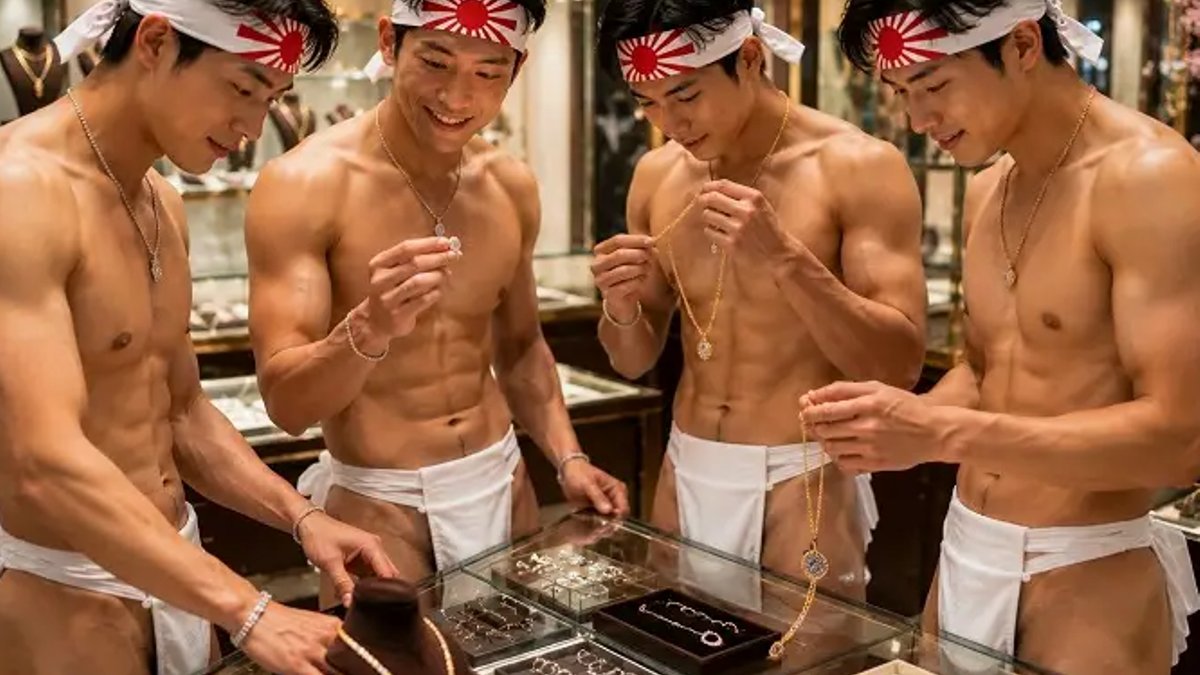
Japanese consumers are buying more jewelry than ever, transforming the country’s luxury market as a weaker yen and rising living costs drive demand for gold, diamonds, and other precious metals as tangible assets. Sales of gems, precious metals, and artwork climbed 19% in the first half of 2026, reaching ¥330 billion—the highest January-to-June total since records began in 2008. While overall department store sales grew just 3.2%, jewelry emerged as one of the few categories outperforming expectations, including duty-free sales.
The change signals a fundamental shift in how Japanese households manage finances. With the yen at its weakest level since the 1980s—trading near ¥164 per dollar—and core consumer prices rising 1.6% in June, many are moving savings from bank accounts into physical assets. Satoshi Maehara, president of Tokyo-based jewelry retailer Happiness and D Co., observes that customers now allocate 5% to 10% of their assets to gold instead of cash. The changing economy has become one of the primary reasons behind the surge in luxury jewelry purchases.
Retailers pivot to gold and diamonds
Retailers are adjusting their strategies to meet this demand. Happiness and D, previously focused on imported watches and luxury brands, has shifted toward jewelry, capitalizing on the surge in gold and diamond purchases. This aligns with broader industry trends: LVMH, which owns Chaumet, and Richemont, the parent company of Cartier, have both reported strong sales in Japan. Richemont’s quarterly revenue in the country jumped 20%, nearly doubling analyst projections, while Kering’s jewelry sales rose 57%, even as its fashion and leather goods business declined 14%.
Domestic buyers, rather than tourists, are the primary drivers of this growth. Department store chains like Isetan Mitsukoshi Holdings report that jewelry and watches rank among top performers, alongside handbags and cosmetics. Analysts at Bain & Company note that shoppers are reducing spending on everyday items to invest in assets with lasting value.
Consumers such as Yuki Hayakawa, a 33-year-old Tokyo office worker, are using bonuses to purchase high-end jewelry, like her ¥600,000 Chaumet necklace, citing rising prices as motivation to buy sooner. Analysts believe this sentiment is becoming increasingly widespread throughout Japan.
The data shows the trend’s strength. In 2025, Japan’s jewelry market was already expanding faster than most global competitors. By mid-2026, it had become a key driver of the country’s retail recovery. When currency weakens and costs rise, consumers turn to assets they trust, and for Japanese shoppers, that increasingly means gold, diamonds, and established brands.
Investment-grade jewelry reshapes department stores
Department store operators are expanding their jewelry offerings to align with shifting consumer priorities. Isetan Mitsukoshi Holdings, which operates flagship stores in Tokyo’s Ginza district, has introduced limited-edition collections from brands like Mikimoto and Tiffany & Co., emphasizing pieces with higher gold content and larger gemstones. Executives highlight growing interest in “investment-grade” jewelry, items designed to appreciate over time, rather than seasonal fashion. Store staff report that customers now ask about metal purity and gemstone certifications, prompting additional training on valuation.
Behind the counter, sales associates encounter a different type of buyer. Older shoppers, particularly those in their 50s and 60s, dominate purchases of gold bars and coins, while younger consumers, such as Hayakawa, prefer branded jewelry with resale potential. A 42-year-old Osaka-based marketing manager, who requested anonymity, bought a ¥1.2 million platinum ring from Bvlgari after calculating that its intrinsic metal value would counter future price increases. “I’d rather own something that retains value than a bag that loses it immediately,” she explained.
Vintage and pre-owned luxury surges
The trend has also boosted demand for vintage and pre-owned luxury jewelry. Auction houses like Sotheby’s Japan and Christie’s Tokyo report record sales of estate pieces, with Japanese collectors outbidding international buyers for items such as Harry Winston rings and Van Cleef & Arpels brooches. Sotheby’s Tokyo branch saw a 40% increase in jewelry auction lots sold to domestic clients in the first half of 2026, with average hammer prices rising 15% year-over-year. Experts link the surge to two factors: retirees’ distrust of traditional banking and a cultural reassessment of heirloom value.
Global brands are leveraging this shift through deeper local partnerships. Cartier, with 20 stores in Japan, launched a loyalty program offering discounts on gold purchases tied to annual spending thresholds. Tiffany & Co. introduced a “Jewelry Reserve” membership in Japan last year, granting members early access to new collections and exclusive buying rights. Meanwhile, LVMH’s Chaumet expanded its Tokyo flagship store, adding a dedicated “investment jewelry” section featuring pieces certified by the London Bullion Market Association.
Even mid-tier jewelry brands are benefiting. Domestic labels like Mikimoto, known for its cultured pearls, have seen demand for its 18-karat gold sets increase by 35% annually as consumers prioritize locally made products. Toshiyuki Mikimoto, the company’s president, attributes the growth to renewed trust in Japanese craftsmanship during economic uncertainty. “When people feel insecure about the future, they turn to what they trust, and that’s often made in Japan,” he said. The trend has led to longer wait times for custom orders, with some workshops reporting six-month backlogs for bespoke gold pieces.


