


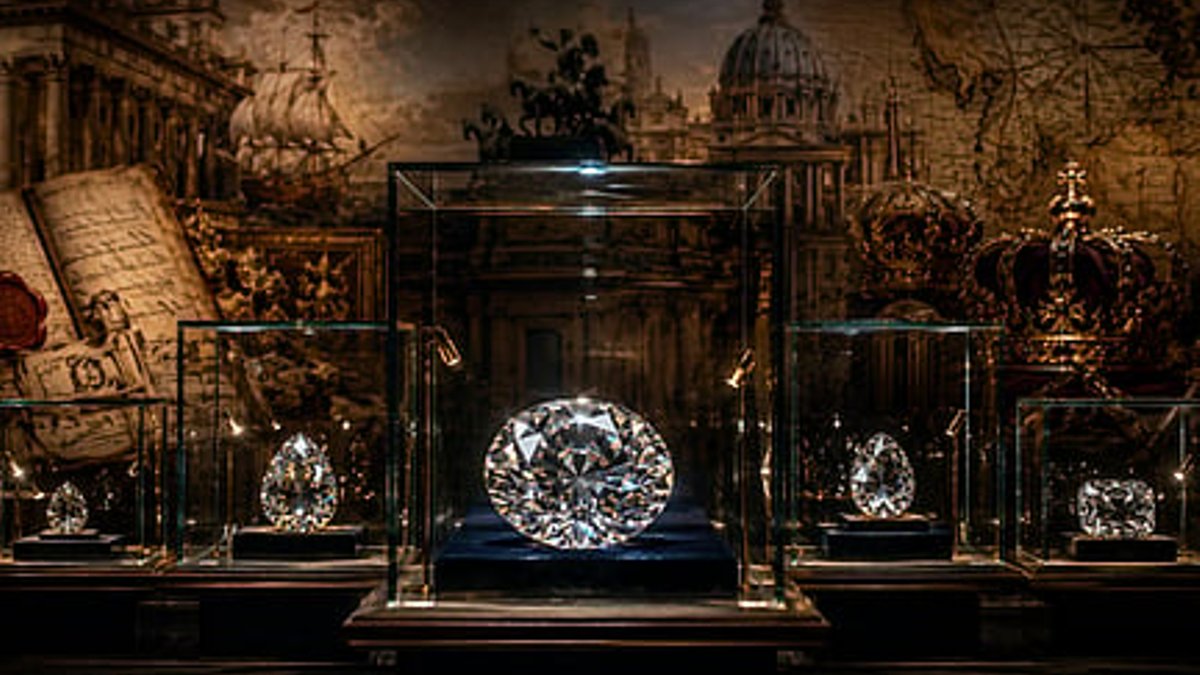
For centuries, natural diamonds have occupied a singular place in human civilization. Few objects created by nature have travelled so intimately through the political, cultural, and emotional history of humanity. They evoke royal courts, revolutions, dynasties, conquests, romances, and personal destinies. Over time, they have become more than gemstones. They have become part of the heritage of humanity.
Yet, the industry has never created a global framework to identify, recognize, and preserve its most significant symbols of heritage. Humanity protects its monuments, manuscripts, temples, and palaces through elaborate systems of cultural memory. The diamond industry, whose history spans centuries and traverses continents, never established its own equivalent. This oversight becomes increasingly visible as laboratory-grown diamonds compete for market share.
The Battle for Cultural Significance
The rise of laboratory-grown diamonds has exposed a fundamental vulnerability. When the conversation centres on physical properties or pricing, every rational argument can be met with a counter-argument from laboratory-grown producers. A laboratory can make a diamond. It cannot make history. It cannot recreate the journey of the Hope Diamond through royal collections and revolutions. It cannot reproduce the cultural mythology surrounding the Koh-i-Noor. It cannot reproduce the story of the Star of the South, discovered in Brazil in 1853 by an enslaved woman, whose extraordinary find helped secure her freedom.
Related: Heritage Diamonds Get Infrastructure
The real battlefield is not the grading report. It is the story. Heritage transforms an object into a symbol. It gives depth to rarity. It allows a gemstone to transcend material value, and become part of collective memory. The World Diamond Heritage List seeks to create a symbolic constellation of 100 diamonds capable of reminding the world where the enduring fascination of natural diamonds truly resides: not in specifications, but in the human stories, and moments in history they have carried across centuries.
These 100 diamonds are merely the visible summit of a deeper truth — every natural diamond, even a modest stone in a family jewellery box, carries a personal history. By preserving the famous ones, we build a cultural framework that honours the story of every diamond.
A History-Based Approach
The selection criterion is deliberately not gemmological. Size does not matter. Purity does not matter. Cut does not matter. The World Diamond Heritage List is a historical list. Our single defining criterion is human impact. The right question is never what is this diamond worth. It is always what has this diamond meant.
Related: UK FTA fuels value-added jewellery export surge
This initiative aims to provide a new way to engage the public and secure the future of the natural diamond industry. It offers a different path forward by emphasizing the unique history of the stones. In a market increasingly focused on technical specifications, the focus on human impact provides a distinct advantage.
Looking Ahead
The World Diamond Heritage List is only the beginning. The World Diamond Day, created by the World Diamond Heritage Board (WDHB), and officially launched on April 8 2026, with execution led by the Natural Diamond Council (NDC), established a collective industry voice. The WDHL is the next step: historical and cultural proof that natural diamonds are carriers of human history, whose stories are real, documented, and irreplaceable.
Beyond the List lies Mission UNESCO 2028 — exploring the recognition of natural diamonds as part of humanity’s broader cultural heritage. Each initiative reinforces the next. Together, they form a coherent cultural architecture for natural diamonds. The public nomination phase opened on May 18 2026, and closes on June 18 2026. Every person — industry professional or diamond lover — is invited to nominate up to five diamonds. Because the World Diamond Heritage List does not belong to a single organization, institution, or country. It belongs to the world. And it begins with you.


