


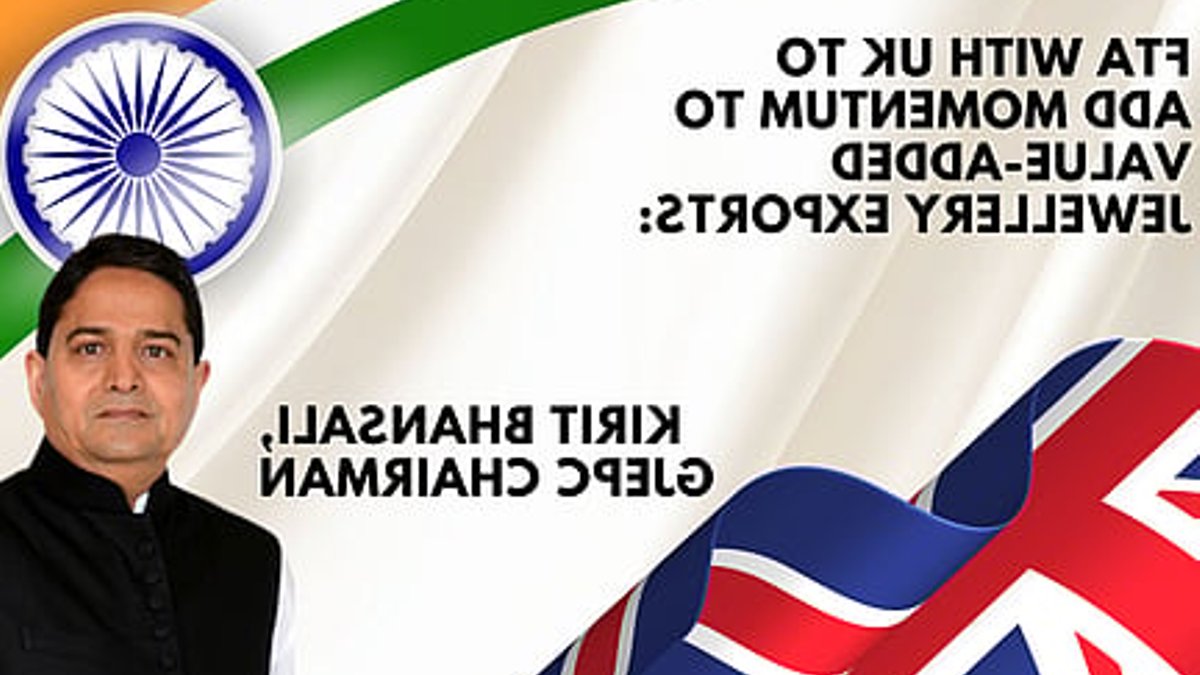
The recently inked free trade agreement (FTA) between India and the UK is set to bolster India’s jewellery exports significantly, as per Kirit Bhansali, Chairman of the Gem and Jewellery Export Promotion Council (GJEPC). This agreement comes at a time when India is already a dominant player in the global diamond market, supplying nearly 90% of the world’s cut and polished diamonds. The UK, with its robust luxury retail ecosystem, offers a high-value market with immense potential for Indian diamantaires.
Unhindered Access to the UK Market
Under the FTA, Indian diamantaires will enjoy unhindered access to the UK market, enabling them to increase their export volumes. This access will also facilitate the establishment of long-term supply contracts with UK-based brands and retailers. Such contracts can provide Indian companies with a steady revenue stream and help them plan their production more effectively. Moreover, the FTA encourages closer collaboration between Indian and UK companies, allowing Indian players to move up the value chain by offering design-led and branded jewellery products.
For instance, Indian companies can work with UK retailers to create exclusive designs tailored to the UK market. By investing in design and branding, Indian companies can differentiate themselves from competitors and command higher prices for their products. This shift towards design-led and branded offerings can help Indian companies tap into the UK’s premium luxury jewellery market, which is less price-sensitive than other segments.
Related: JGW September Highlights Rare Gems, Bold Designs, Programme
Opportunities for Small and Mid-Sized Units
Smaller Indian diamond units often face challenges in penetrating developed markets due to their lack of established networks and limited resources for market development. The FTA creates new pathways for these entities by supporting direct connections through platforms like Buyer-Seller Meets. These events provide unprecedented visibility and access to UK retailers, enabling smaller Indian companies to build relationships and integrate into the UK market.
For example, a small Indian diamond unit from Surat, a major jewellery hub, could participate in a Buyer-Seller Meet and pitch its products directly to UK retailers. If successful, this could lead to long-term business relationships and help the Indian company diversify its business beyond its traditional customer base. Such opportunities can also encourage smaller units to invest in product innovation and branding, thereby enhancing their competitiveness in the global market.
The UK’s strengths in design, branding, and retail innovation can complement India’s manufacturing prowess and artisanal skills. Through the FTA, both countries can collaborate to co-create collections, explore joint branding initiatives, and exchange technological expertise. For instance, Indian companies can learn from UK retailers about effective digital sales strategies, while UK companies can benefit from India’s advanced diamond cutting and polishing technologies.


