


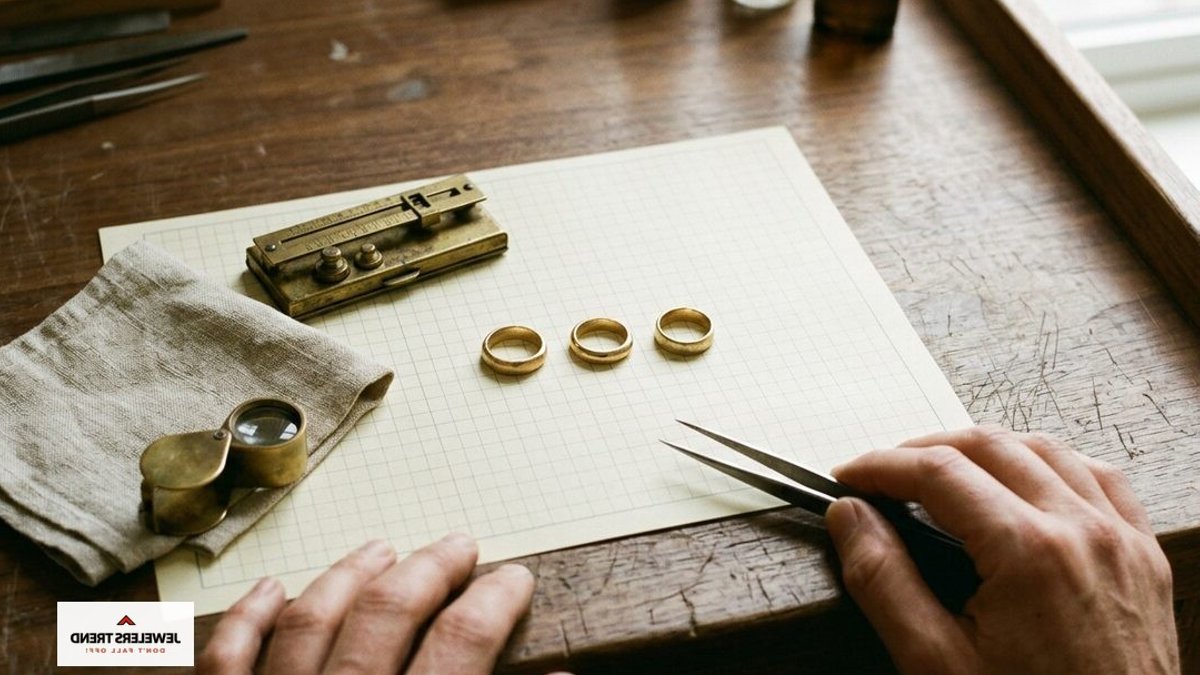
The karat number on gold jewelry indicates the proportion of pure gold in the piece. This measurement affects its strength, cost, and how it ages over time. The scale ranges from 24 karats, which is pure gold, down to alloys with less gold content, where additional metals are mixed in to alter hardness, color, and price.
Most jewelry falls between 10k and 18k. The three most common purities are:
- 18k: Contains 75% gold, offering a balance between purity and durability. It maintains a deep color while resisting scratches better than higher-karat gold.
- 14k: Made up of 58.5% gold, this represents a practical middle ground. It is harder than 18k, making it well-suited for rings and bracelets worn frequently.
- 10k: Composed of 41.7% gold, this is the most durable and budget-friendly option. It is often used in affordable jewelry or items subject to heavy use.
The trade-off between karat and practicality is clear: higher karat means more gold but a softer finish, while lower karat improves strength and reduces cost. For instance, 10k holds its shape better under daily wear, whereas 18k is more prone to scratches but retains greater gold value.
The color of gold varies depending on the metals used in the alloy. Pure 24k gold appears bright yellow, but lower karats often include copper or nickel, altering the shade. Accurate color assessment requires comparing pieces in person under identical lighting.
Price is directly tied to gold content. According to the report index on October 9, 2026, when gold closed at $4,194.35 per troy ounce, the melt value per gram for each karat was as follows:
- 18k: $101.14 per gram
- 14k: $78.89 per gram
- 10k: $56.23 per gram
This shows that 18k contains about 28% more gold value per gram than 14k, while 14k holds roughly 40% more than 10k. However, melt value only accounts for the gold itself—retail prices include labor, design, and gemstones, often exceeding the metal’s worth.
Gold prices change frequently. The same index recorded a 4.15% drop the week before and a 1.27% rise the week after, meaning per-gram comparisons are only valid at a specific moment. Buyers should use melt values as a reference rather than a fixed standard.
Choosing the right karat depends on intended use. For daily wear, such as rings or chains, 14k is often the best option, balancing durability and gold content. Those prioritizing affordability and toughness may prefer 10k, while 18k suits special-occasion pieces or items where gold purity is most important.
When purchasing, check the karat marking on the item and compare weights rather than size alone. A heavier piece may contain more gold than a lighter one of the same dimensions. Documentation should always be requested if purity is unclear, as some sellers may misrepresent gold content.


