


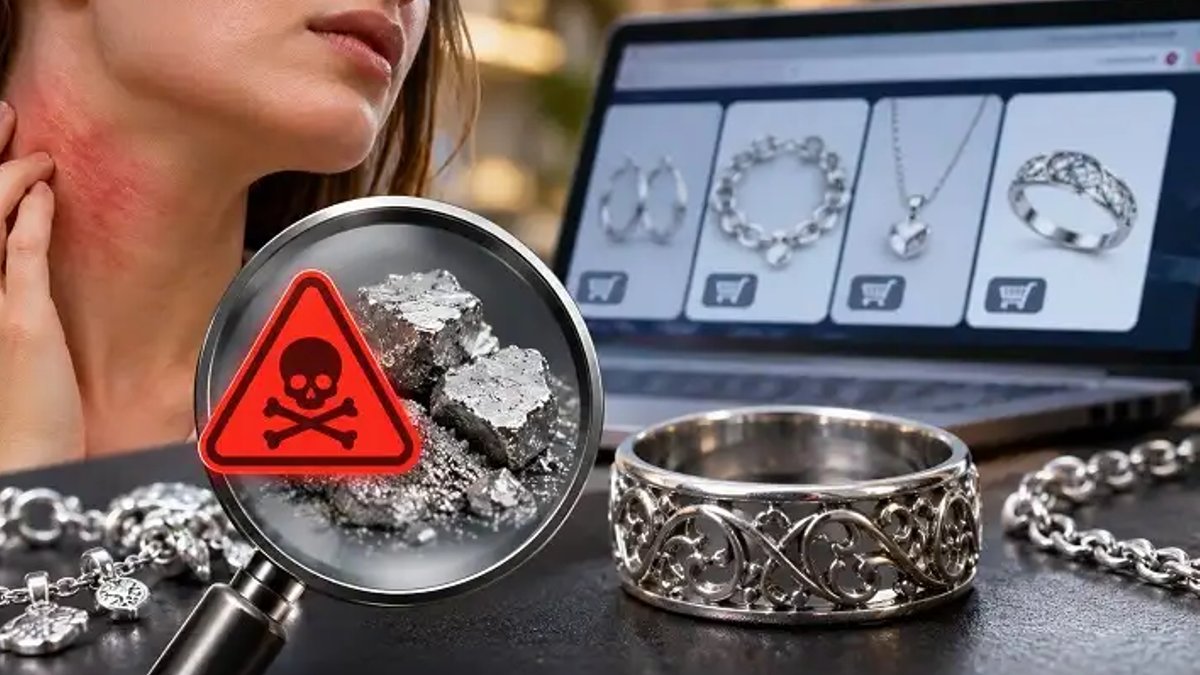
The BBC uncovered alarming evidence of hazardous metal levels in jewelry falsely labeled as sterling silver across leading digital retail platforms. Tests found some pieces laced with cadmium—a substance linked to cancer—while others contained barely any real silver despite claims of high-quality metal content.
Toxic Jewelry Found Online
This raises red flags about the rapid expansion of online jewelry sales, especially on sites like Amazon, Temu, Etsy, eBay, OnBuy, and TikTok Shop. Some accessories supposedly made of silver were found to contain cadmium levels thousands of times above British safety limits, exposing flaws in platform checks and product authenticity systems.
BBC’s Watchdog team, collaborating with Sheffield Assay Office, analyzed 25 jewelry items bought from five online retailers. The selection included low-cost bracelets, necklaces, earrings, and rings all marketed as sterling silver.
The test results were shocking: eight of the 25 items surpassed Britain’s 0.01% cadmium threshold, with some exceeding it by up to 10%. Just two pieces met the standard for genuine sterling silver.
Three of the cadmium-contaminated products came from Amazon, three from Temu, and one each from Etsy and OnBuy. Sophie Langley, who led the laboratory analysis, described the concentrations as exceptionally high compared with legally permitted levels.
The probe showed that labels like ‘925 sterling silver’ are unreliable, especially when prices are far below what the claimed metal content should cost.
An earlier investigation published by The Sunday Times revealed an even more disturbing example involving an inexpensive ring sold through Amazon. Advertised as 925 sterling silver, the ring reportedly contained approximately 92.3% cadmium, representing more than 9,000 times the British legal concentration limit.
A TikTok Shop bracelet also tested alarmingly high, with charms containing about 33% cadmium, roughly 3,300 times the allowed amount. After the findings, Amazon pulled the affected listings, while TikTok Shop recalled the bracelet, contacted buyers, and banned the seller.
The discoveries suggest contaminated jewelry isn’t limited to a single platform or vendor. British jeweler Jayne Bond later flagged another ring resembling previously tested contaminated pieces.
In September, Bond bought a nearly identical ring from a different Amazon seller. Initial tests again detected cadmium, despite the item being sold as sterling silver at an unusually low cost.
Amazon subsequently confirmed that the newly identified listing had been removed. However, the incident raised concerns about whether removing individual listings adequately prevents hazardous products from returning under different seller accounts.
Cadmium Health Risks Explained
Cadmium is a toxic heavy metal used in certain industrial processes, including battery manufacturing, coatings, and metal production. It is classified as a known human carcinogen, with inhalation exposure particularly associated with lung cancer.
Read Also: US and Thailand near tariff free gem deal
Prolonged exposure can also damage the kidneys and weaken bones. However, the presence of cadmium in jewelry does not automatically mean that wearing the item will cause cancer. The actual health risk depends on exposure levels, duration, and how the metal enters the body.
Rob Chilcott, a retired professor of toxicology, emphasized that ingesting cadmium-containing objects can be particularly hazardous. Children may face additional risks because they sometimes place jewelry in their mouths.
The laboratory findings therefore establish serious chemical safety violations, although they do not demonstrate that consumers wearing the tested jewelry developed cancer. The BBC investigation also highlighted the experience of Meranda, a 34-year-old customer who purchased a necklace advertised on Etsy as handmade sterling silver.
After wearing it for several days, she experienced significant irritation around her neck. Testing at the Sheffield Assay Office detected nickel in the necklace, with one section of the chain containing concentrations reaching 11%.
Nickel is a common cause of allergic contact dermatitis, producing itching, redness, and inflammation in susceptible individuals. Further testing revealed that part of the supposedly sterling silver necklace contained only 8.9% silver.
Genuine sterling silver must contain at least 92.5% silver. Despite displaying a 925 marking, the necklace therefore failed to meet the advertised standard. Meranda eventually received a refund after contacting the seller.
Economics of Precious Metals
The case illustrates how misleading precious-metal claims can conceal both inferior materials and potential health concerns. The economics of precious metals provide another warning sign. Silver is considerably more expensive than cadmium, making extremely cheap jewelry advertised as solid sterling silver commercially questionable.
During 2025, silver averaged approximately $38 per troy ounce, according to United States Geological Survey figures, while cadmium averaged approximately $3.90 per kilogram. This represented an enormous difference in raw-material costs.
A genuine 2.5-gram sterling silver ring contains approximately 2.31 grams of pure silver. When silver prices approached $60 per troy ounce in October 2026, that silver content alone would have been worth approximately $4.46, excluding manufacturing, packaging, shipping, marketplace commissions, and retailer profits.
A supposedly genuine sterling silver ring selling for less than its estimated silver value should therefore prompt closer scrutiny. Nevertheless, low prices alone cannot establish contamination or fraud.
Marketplaces Crack Down
Online marketplaces face growing pressure to ensure the authenticity and safety of products sold on their platforms. Amazon, eBay, Temu, and OnBuy have stated that misleading product listings violate their policies, and they have removed identified jewelry from their sites.
In the United States, regulatory requirements differ between federal and state jurisdictions. The Federal Trade Commission prohibits deceptive sterling silver descriptions, while several states impose specific restrictions on cadmium in jewelry.


