


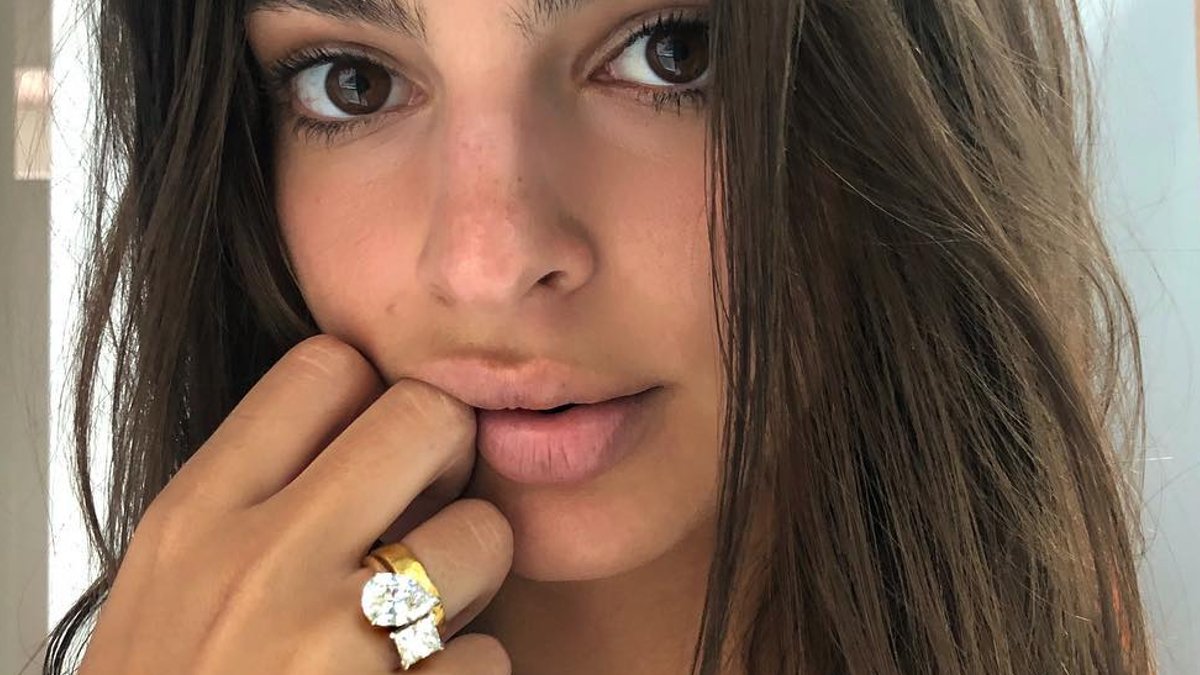
The Toi et Moi ring has long carried a subtle meaning, its two-stone layout symbolizing togetherness while allowing each gem to stand apart. The design originated in 1796 when Napoléon Bonaparte proposed to Joséphine de Beauharnais with a ring showcasing two pear-shaped stones, a diamond and a sapphire, each about one carat, mounted side by side. Although their marriage ended, the piece survived as one of the few remaining artifacts from that period.
The French term Toi et Moi, literally “You and Me”, has never been directly translated in jewelry design, reinforcing the ring’s central theme: two separate elements united as one. Some jewelers insist the stones should meet to emphasize unity, while others prefer a gap, positioning the concept as a representation of partnership rather than forced similarity. The only fixed element is the use of two center stones; everything else, cuts, hues, and carat weights, can differ significantly.
Beyond the Napoleonic era, only two other famous couples are linked to Toi et Moi rings. In 1953, Jacqueline Kennedy received a pair of emerald-cut stones, one diamond, one emerald, each nearly three carats, from John F. Kennedy. Later, in 1966, Queen Margrethe II of Denmark was gifted a Van Cleef & Arpels ring featuring two cushion-cut diamonds totaling six carats, presented by her future husband, Henri de Laborde de Monpezat.
The design experienced renewed popularity in the 21st century, particularly among celebrities. Over the past year, two well-known couples opted for mismatched-stone Toi et Moi rings, a growing trend in engagement jewelry. Actor Robert Pattinson gave Suki Waterhouse a pear-shaped diamond paired with a square pale gem, while White Lotus star Patrick Schwarzenegger chose a round diamond and a pear-shaped diamond set in a bezel for Abby Champion. Both selections avoided prongs, prioritizing both symbolic pairing and practical security.
Modern jewelers now offer diverse interpretations of the style, including connected bands, dramatic plunging settings, or natural diamonds paired with sapphires to mirror Napoléon’s original combination. The design’s enduring appeal lies in its ability to celebrate both shared identity and individuality, a balance that resonates with today’s relationships, where partners cherish both unity and personal expression.
While earlier examples often featured matching cuts, contemporary versions frequently adopt asymmetry, demonstrating the concept’s adaptability. Even as fashion evolves, the fundamental idea endures: two stones, one narrative, conveying love without demanding uniformity.


