


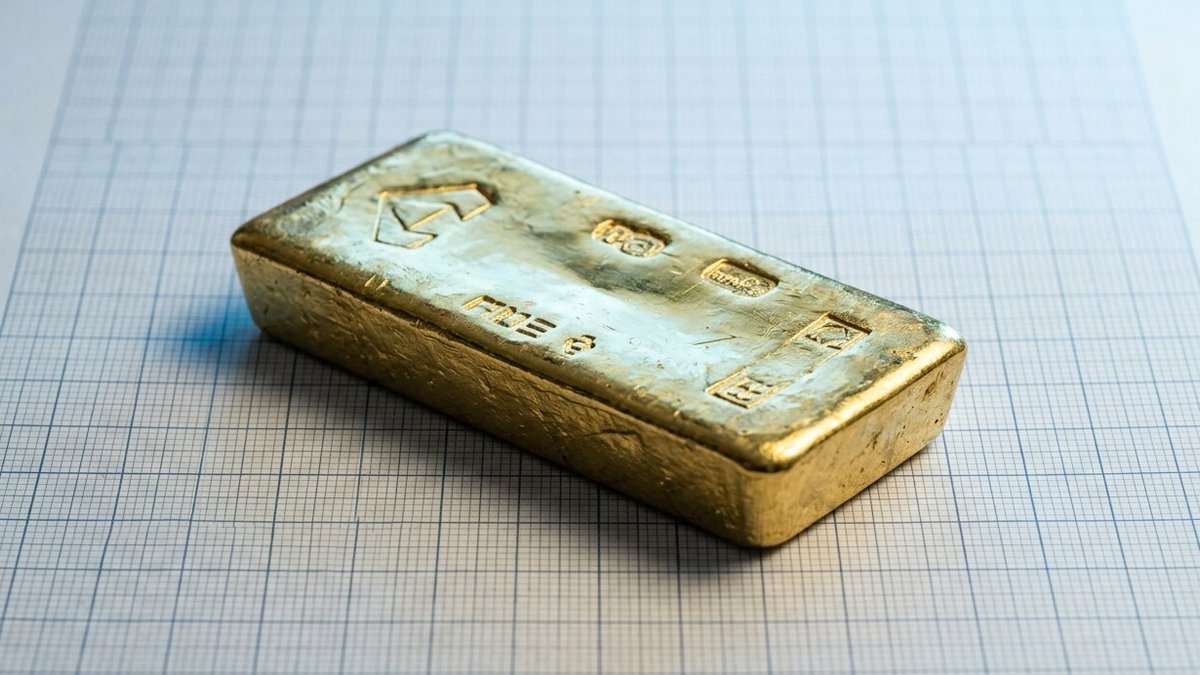
$4,385 marked gold’s trading level on Friday, maintaining a range that has characterized its market since January. Throughout the day, prices fluctuated narrowly between $4,371 and $4,385, with minimal fluctuations observed across key platforms. At 8:17 a.m. ET, Kitco reported $4,371, while JM Bullion listed $4,379.93 shortly afterward, and Trading Economics recorded $4,384.78—a session gain of 1%. Given the market’s two-year rally, this stability stands out.
The all-time high of $5,589.38, reached on January 28, remains untouched, but Friday’s price showed no signs of collapse. Instead, gold has occupied the upper half of its broad trading band since that peak. The 1% increase kept it above $4,380, indicating sustained demand without frantic selling. Buyers and sellers appear balanced, with no rush to reverse the trend.
Three major pricing services, Kitco, JM Bullion, and Trading Economics, remained within $15 of each other throughout the day, a sign of consistent market behavior. Sharp divergences in reference prices often signal disruption, but this week showed none. The absence of chaos suggests a stable environment, with demand and supply in equilibrium.
Central banks continue to underpin gold’s strength. In July, they acquired a net 23 tonnes, extending a 21-month streak of purchases by China. This official demand follows a disciplined approach: it absorbs dips, avoids chasing peaks, and rarely sells. Such steady buying establishes a support level that speculative traders struggle to overcome. While July’s volume was lighter than earlier months, the trend is more significant than any single transaction.
Related Post: Diamond Prices Edge Up, India’s Jewelry Sales Surge 21%
A market supported by central bank activity does not rely on retail excitement to sustain prices. Gold has held its ground even when speculative interest turned negative earlier this year. This stability benefits traders in bullion, scrap, and jewelry sectors. Scrap supplies remain robust because sellers are satisfied with current levels, refiners stay engaged, and the spread between melt value and retail pricing remains stable. A price that drifts sideways near its highs is easier to trade than one swinging wildly, and gold has followed this pattern for months.
Traders are advised to avoid betting against the steady official demand. The January peak of $5,589.38 has not been tested in months, but markets that consolidate below a high often move further in the original direction. Here, that direction is upward. Central bank accumulation provides a firm foundation, while the record high remains the upper boundary. Friday’s $4,384.78 sits between these extremes, closer to the midpoint than either edge, with no immediate signs of a reversal.
Jewelry retailers have already adapted to high, stable prices. Signet reported strong bridal sales while gold was already near these levels, indicating retailers price based on current costs rather than expecting a decline. The diamond market’s resilience occurred despite high metal prices, not because they dropped. This flexibility may persist if gold maintains its position.
Whether the next move pushes toward the January high or drifts lower remains unclear. However, this week’s trading showed no signs of a downward correction. The market operates smoothly, the demand remains steady, and the upward trend continues for now.


